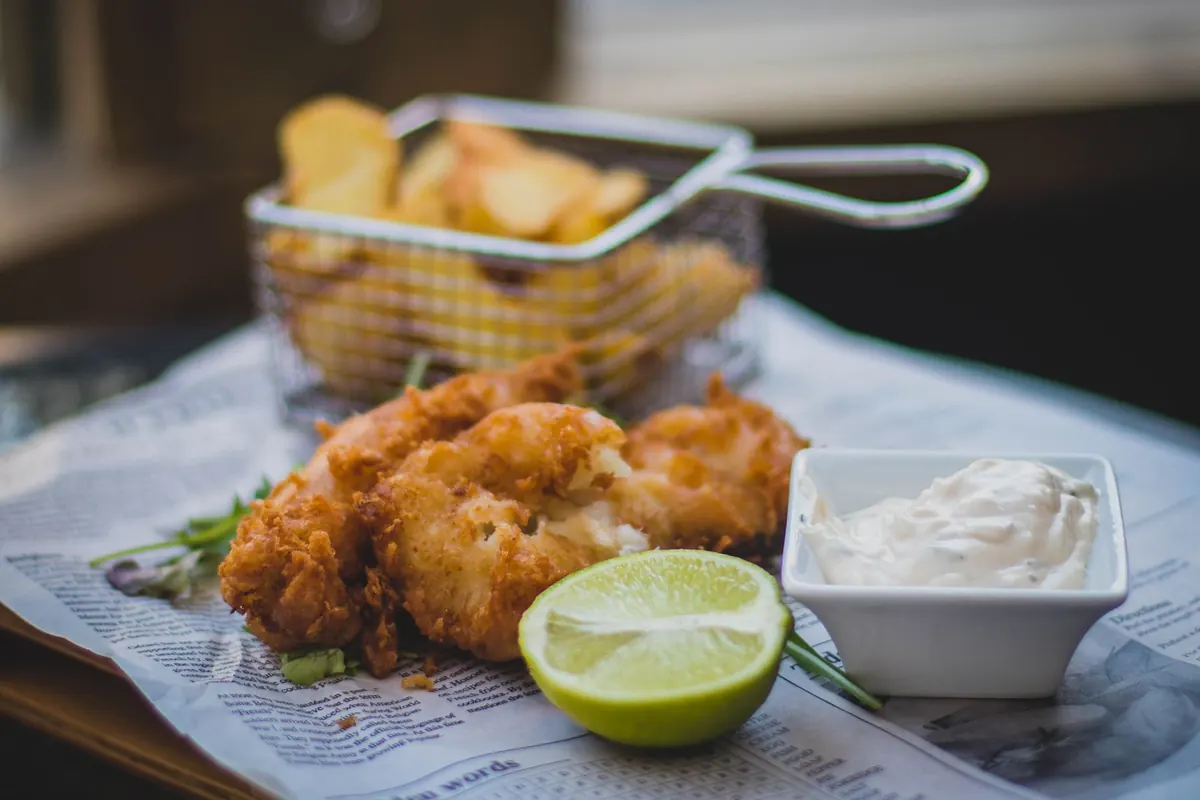
An air fryer will never quite match the paper-wrapped haul from a proper chippy. It will, however, get you crisp chips, a golden crumb and hot fish in about half an hour, with a fraction of the oil and none of the deep-fry panic. The catch is that it only works if you understand what the machine actually is: a small, fierce fan oven. Fans dry things out fast, which is brilliant for crunch and brutal for anything wet or crowded. Get the prep right and your first batch will be genuinely good. Skip it and you'll get pale fish in a steamed breadcrumb jacket and chips that bend instead of snap.
What an Air Fryer Does Well, and What It Doesn't
It excels at reheating, crisping and cooking already-dry food: breaded fillets, par-cooked potatoes, frozen chips with a little help. It struggles with wet batter, which drips off before it sets, and with anything stacked more than one layer deep. Treat the basket like a hot tray, not a fryer full of oil, and your expectations will match reality.
Start With the Chips, Because They Take Longer
Chips are the part most people rush, and they're the reason a lot of air fryer dinners disappoint. Raw potato dropped straight into the basket turns leathery outside and chalky within. You want a par-cook first.
The par-boil
Cut floury potatoes into batons about 1cm thick — even sizes matter more than perfect shapes. Rinse them under cold water until it runs clear, then boil in well-salted water for 5–6 minutes. A splash of white vinegar in the water helps them hold together. You're after edges that soften under a knife while the centre stays firm. Drain well.
The dry and the first blast
Spread the chips on a tray and leave them to steam-dry for 10 minutes, then pat them properly with a clean tea towel. Moisture is the enemy here. Toss with a tablespoon of oil — sunflower, rapeseed or light olive — so every chip has a faint sheen, not a puddle.
Air fry at 180°C (355°F) for 10 minutes, shaking the basket at the halfway point. Then turn the heat up to 200°C (400°F) for 8–10 minutes, shaking every few minutes, until they're deep gold and audibly crisp. Salt them the moment they come out.
If you're using frozen chips
They work, but they need help. Add a teaspoon of oil, toss to coat, and cook at 200°C (400°F) for 15–18 minutes, shaking the basket every 5 minutes. Any longer and they dry into crisps.
Coating the Fish So It Crisps Instead of Steams
Pick thick white fillets: cod loin, haddock, pollock or hake, ideally around 2cm thick. Thin tail pieces overcook before the crumb browns. If you're using frozen fillets, thaw them completely and dry them — squeezing them in a towel is fine.
The three-stage dredge
- Pat the fish dry, salt it lightly, wait 10 minutes, then pat again. The salt pulls out surface water.
- Dust in seasoned flour. Shake off the excess.
- Dip in beaten egg, let the surplus drip away, then press firmly into panko or coarse dry breadcrumbs.
Use one hand for the wet stages and one for the dry, or you'll end up with breadcrumb cement on your fingers. Spray or brush both sides with oil before they go in — crumbs that start dry stay pale.
Skip wet batter on your first attempt
Beer batter needs a bath of hot oil to set instantly. In a basket, it slides off and pools underneath. Panko or dry breadcrumbs give you crunch with none of the drama. If you really want batter, chill it hard, make it thicker than usual, and cook on a pre-oiled tray at high heat — but expect a softer crust.
Timings That Get You Close
Every air fryer runs differently, so treat these as a starting point and check two minutes early.
- Chips, homemade: par-boil 5–6 minutes, then 180°C (355°F) for 10 minutes, then 200°C (400°F) for 8–10 minutes.
- Fish, 1.5cm thick: 190°C (375°F) for 8–10 minutes.
- Fish, 2.5cm thick: 190°C (375°F) for 12–14 minutes.
- Frozen chips: 200°C (400°F) for 15–18 minutes.
- Re-crisping a cooled batch: 160°C (320°F) for 4–5 minutes.
Fish is done when it flakes at the thickest point and has lost its translucency. If you keep a thermometer in the drawer, white fish is generally cooked at around 63°C (145°F) internally. For anything to do with allergies, check the labels on your breadcrumbs before you start.
The Five Rules That Beat Sogginess
- Dry everything twice. Potatoes, fish, hands, basket.
- Oil lightly and evenly. A spray bottle beats a drizzle for coverage.
- Never crowd. One layer, small gaps between pieces. Cook in batches rather than piling up.
- Shake and turn. Every five minutes for chips, once halfway for fish.
- Serve on a rack, not a plate. Trapped steam underneath undoes ten minutes of work.
Cooking in Batches Without Losing the Crunch
Do the chips first. They survive a warm hold far better than fish does. Tip them onto a wire rack set over a baking tray, slide it into an oven at 100°C (200°F) with the door slightly ajar so steam escapes, and give them two minutes back in the air fryer before serving if they've softened. Cook the fish last, in one layer, and plate everything within a couple of minutes.
Your First Batch, Start to Finish
Peel and cut the potatoes, par-boil them, dry them, and set them aside. Bread the fish and chill it while the chips take their first blast. Finish the chips at high heat, hold them warm, then cook the fish. Salt, vinegar, tartare, mushy peas if you like them, and eat immediately — this is not a meal that waits patiently on the counter.
Expect the first attempt to be slightly paler or softer than you imagined. Note the timing your machine needed, adjust by a minute next time, and you'll have a repeatable weeknight version of fish and chips that nobody has to apologise for.
Photo: Valeria Boltneva / Pexels